List of 12 Different Video Game Genres Types with Examples
The global gaming industry has expanded into a multi-billion-dollar system which attracts billions of players who play games on consoles and PCs and mobile devices. The industry operates through multiple video game genres which provide distinct gameplay experiences to players.
Game genres enable players to classify games according to their gameplay mechanics and game objectives and their methods of player engagement. Developers need to know the different game genres because it impacts their process of game creation and revenue generation. Players can use this information to find games which match their particular interests.
The comprehensive guide will present an overview of major video game genres which include Video Game Genres types and industry trends which will impact gaming in 2026.
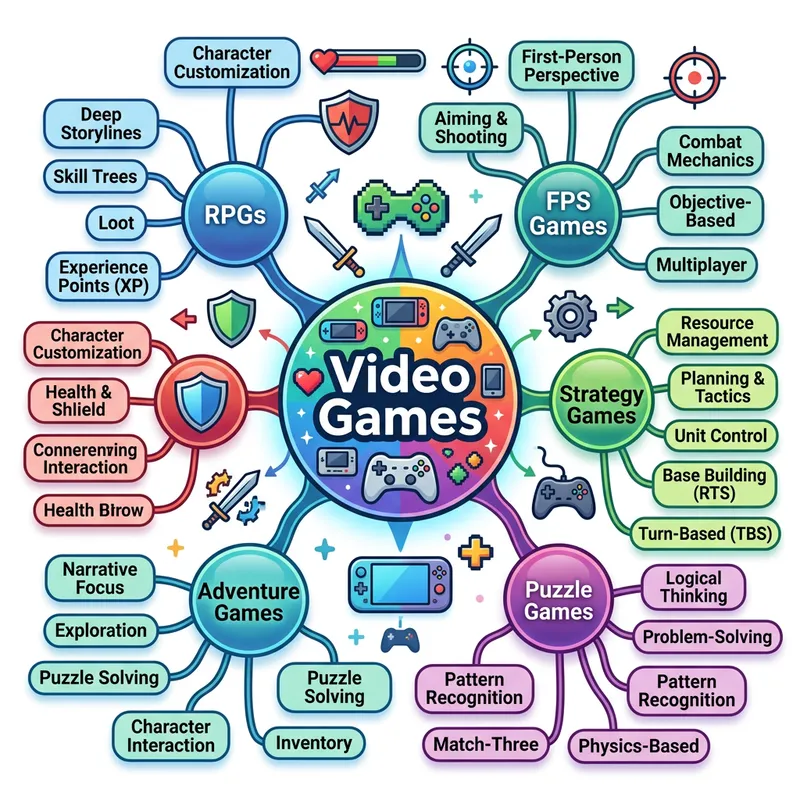
What are Video Game Genres?
Video game genres are classifications that group games based on their gameplay style, mechanics, and overall experience. While earlier games fit neatly into single genres, modern titles often combine multiple genres to create more immersive experiences.
For example, The game like Grand Theft Auto V combines action and adventure and open-world and sandbox game elements which show how genre definitions are changing.
Major Video Game Genres (Detailed Breakdown)
1. Action Games
Action games serve as one of the most successful game types which players enjoy playing. The games require players to play at high speeds because they must execute movements with exact timing and proper hand-eye coordination.
Key Features:
The system enables players to engage in combat without any interruptions. Players can execute platform jumps together with other movement techniques. Progression in the game requires players to demonstrate their abilities through specific challenges.
Popular Examples:
God of War
Devil May Cry
The modern gaming industry features action elements which game developers use to create multiple hybrid game styles that originate from this genre.
2. Action-Adventure Games
The genre combines action gameplay elements with exploration and puzzle solving and storytelling elements.
Key Features:
The game requires players to progress through its story using its interactive elements. The game world offers players either complete freedom or controlled exploration. Players engage in combat while exploring the game world.
Examples:
The Legend of Zelda
Uncharted
The AAA segment uses these games as its main products because they deliver an equal distribution of interactive elements and narrative components.
3. Role-Playing Games (RPGs)
RPGs enable players to experience life as their chosen character who represents them throughout the game's narrative arc and mission-based and character development activities.
Types of RPGs:
The Action RPG enables players to fight enemies through real-time interactive combat. JRPGs feature turn-based battles which follow a narrative-driven format. MMORPGs allow players to explore virtual worlds through online multiplayer gameplay.
Examples:
The Witcher 3
Elden Ring
The complete stories of RPGs together with their character customization options keep players engaged with the game.
4. Shooter Games (FPS & TPS)
Players in shooter games engage in combat using guns and other weapons while competing against others in various gameplay modes.
Types:
First-Person Shooter (FPS) The player experiences the game through their character's eyes. Third-Person Shooter (TPS) The player views the game world from a distance behind their character. Battle Royale
Examples:
Call of Duty
Counter-Strike 2
Fortnite
The esports and multiplayer gaming sectors use shooter games as their dominant content which brings in millions of players who compete across international platforms.
5. Strategy Games
The core of strategy games consists of three essential components which include strategic planning and resource allocation and tactical gameplay choices whereas the game requires players to execute fast movements.
Types:
Real-Time Strategy (RTS)
Turn-Based Strategy
Examples:
Age of Empires
Civilization VI
The games attract gamers who seek brainteasers and want to develop their strategies over extended periods.
6. Simulation Games
Simulation games create virtual environments which reproduce real-life systems and activities and natural surroundings.
Key Features:
Realistic mechanics
Open-ended gameplay
Player-driven outcomes
Examples:
The Sims
Microsoft Flight Simulator
The simulation gaming trend experiences rapid growth because players find its gameplay both stress-free and imaginative.
7. Sports & Racing Games
These games replicate actual sports events and vehicle driving experiences.
Examples:
FIFA
NBA 2K
Forza Horizon
The game achieved widespread popularity because of its authentic gameplay experience and official team partnerships and its various competitive game modes.
8. Puzzle Games
Puzzle games require players to use logic their pattern detection ability and their capacity to solve problems.
Examples:
Candy Crush Saga
Tetris
Research shows that puzzle games represent the largest segment of mobile gaming because they provide simple gameplay which enables users to complete their gaming sessions within brief time frames.
9. Adventure Games
The primary elements of adventure games include their storytelling methods and their world exploration systems and their character interaction systems.
Examples:
Life is Strange
The Walking Dead
The games provide an optimal experience for players who appreciate watching movies with elaborate storylines.
10. Sandbox & Open-World Games
Sandbox games permit players to freely navigate their virtual worlds while building new creations and interacting with their surroundings.
Examples:
Minecraft
Grand Theft Auto V
The rising interest in open-world and sandbox games stems from their ability to provide players with freedom to navigate their virtual worlds through creative and non-linear gameplay.
11. Survival Games
Survival games test players' ability to manage resources and create tools while they attempt to survive in difficult environments.
Examples:
Rust
ARK: Survival Evolved
The games merge three gameplay elements that include crafting, exploration, and combat.
12. Horror Games
Horror games create an experience which makes players feel afraid while they maintain a state of suspenseful tension.
Examples:
Resident Evil
Silent Hill
The system uses atmospheric sound design elements together with storytelling to create emotional connections with players.
Latest Trends in Video Game Genres (2025–2026)
1. Rise of Hybrid Genres
Games now mix different genres which include RPG and Shooter and Survival to create better player experiences.
2. Growth of Open-World Experiences
Players now prefer games that allow them to explore different areas which has resulted in sandbox-style gameplay becoming the most popular game mode.
3. Mobile Gaming Expansion
Mobile platforms maintain their market dominance because they provide people with access to:
- Puzzle games
- Casual games
- Idle RPGs
4. Indie Game Boom
The video game industry witnesses a yearly release of thousands of indie games which introduce fresh gameplay styles through their unique combination of different game genres.
5. Esports & Competitive Gaming
The esports ecosystem depends on shooter games and strategy games which attract large audiences from around the world.
The Importance of Video Game Genres
The understanding of video game genres establishes critical knowledge that benefits multiple groups including developers who use it to identify their target audience and use it to determine their game mechanics and monetization strategies while having it match existing market needs. The system helps players find new games which improves their entire gaming experience.
Final Thoughts
The gaming industry uses video game genres as its fundamental element because they determine the design and marketing and player experience of video games. The action-packed shooter and the immersive RPG and the innovative sandbox world each provide distinct gaming experiences through their different game genres.
The ongoing technological progress will produce new innovative possibilities because it enables genre combinations and genre expansions. The understanding of game genres and market trends is vital for all gamers and developers and business professionals because it helps them maintain their competitive edge in the expanding gaming market.