Whether you’re new, or you’ve been around casinos for a while, learning what is Caribbean Stud Poker, the official Caribbean Stud Poker rules, and a few practical Caribbean Stud Poker strategies can help you play with more confidence and, ideally, make smarter choices.
What Is Caribbean Stud Poker?
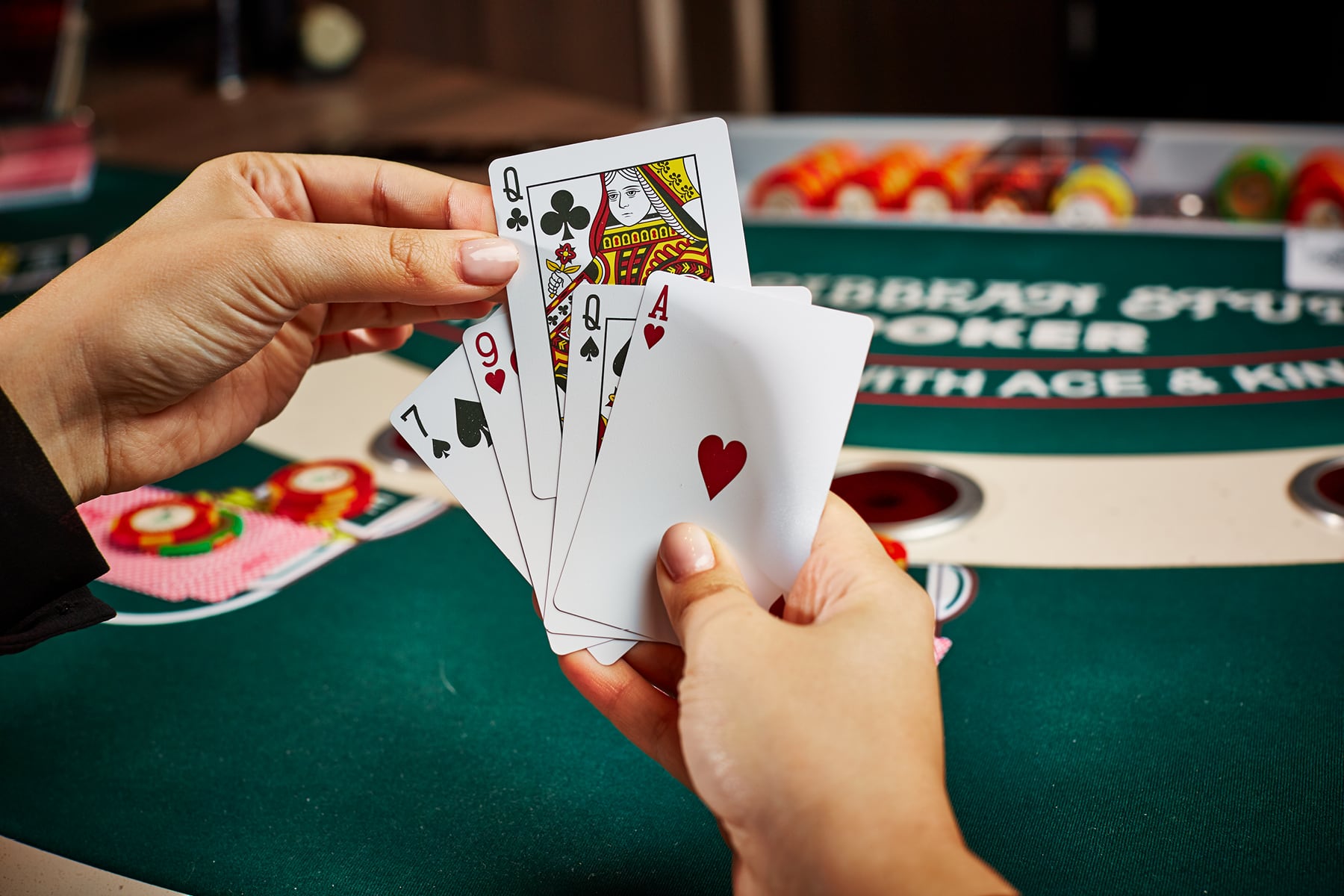
So What Is Caribbean Stud Poker? Caribbean Stud Poker is a casino table game built on five-card stud poker. But instead of rival hands across the felt, each player competes against the dealer only. Your goal is straightforward: finish with a stronger five card poker hand than the dealer once everything is shown.
It took off in Caribbean casinos during the 1980s, and from there it slowly spread, so today you’ll see it in many land based venues and online platforms too.
Also, unlike Texas Hold’em, you don’t have betting rounds stacked on top of each other, and there’s no bluffing angle. You’re mostly judging your own cards, then deciding whether to fold, or to stay in by putting down a second bet.
How Caribbean Stud Poker Works
A typical hand runs like this, more or less:
- You start by placing the required ante bet.
- Then each player, plus the dealer, is dealt five cards.
- One of the dealer’s cards is shown face up, while the rest of the dealer cards remain hidden.
- Players check their own cards carefully.
- After that, each player must either fold and lose the ante, or raise by placing another bet, often around double the ante.
- Next, the dealer reveals all their cards.
- If the dealer qualifies, the hands are compared, and the payouts are issued.
This simple structure, kind of no nonsense, is why Caribbean Stud Poker is often described as one of the easiest poker style casino games to learn.
Caribbean Stud Poker Rules
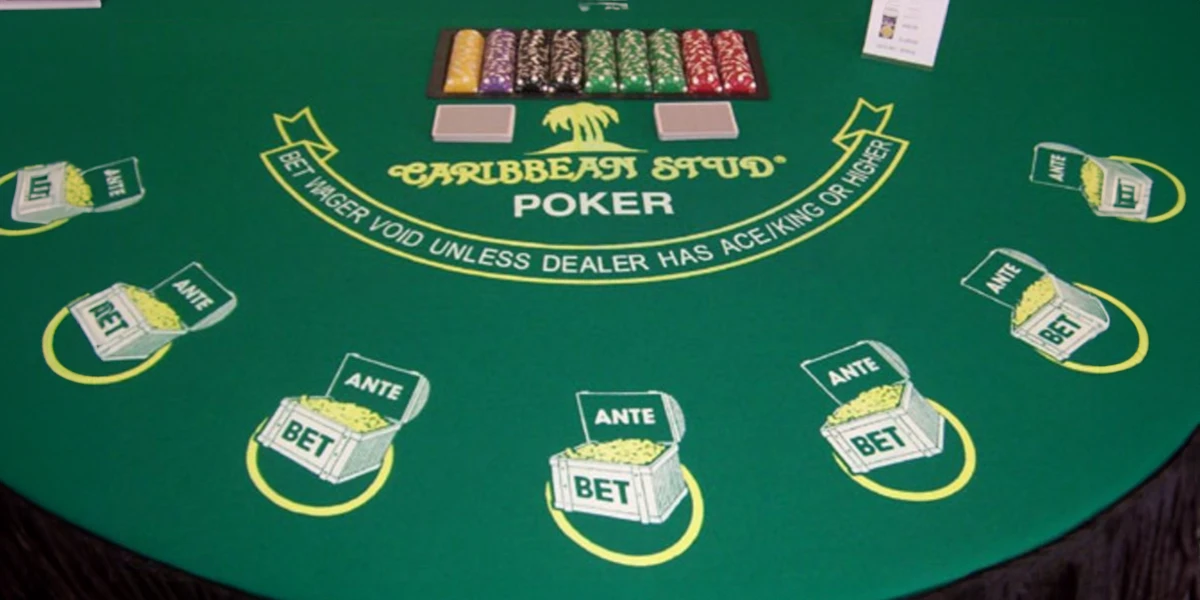
Learning the official Caribbean Stud Poker rules first, is a big deal before you even sit down. it kinda helps you not get surprised later, y’know.
1. Ante Bet
Each hand starts with an ante bet. You place the ante first , otherwise you won’t get dealt cards at all.
2. Five cards per person
You get five face-down cards. the dealer also gets five, but they only show one card at the very beginning.
3. Dealer qualifications
In most versions, the dealer has to “qualify” using at least:
- Ace and King high, or
Any better poker hand.
If the dealer does not qualify then, your ante bets are usually paid even money. Also if there was a raise bet those are commonly pushed back, basically a return.
4. Player Decision
Once you see your hand and the dealer’s one visible card, you choose to:
- Fold
- Raise (often 2x the ante)
5. Showdown
If both sides keep going, then you compare hands. The standard poker hand rankings decide who wins, and that’s it.
Poker Hand Rankings
Caribbean Stud Poker follows traditional poker hand rankings:
| Rank |
Hand |
| 1 |
Royal Flush |
| 2 |
Straight Flush |
| 3 |
Four of a Kind |
| 4 |
Full House |
| 5 |
Flush |
| 6 |
Straight |
| 7 |
Three of a Kind |
| 8 |
Two Pair |
| 9 |
One Pair |
| 10 |
High Card |
Knowing these rankings is crucial when evaluating whether to raise or fold.
Typical Payouts
While payout tables vary by casino, a common raise-bet schedule is:
- Royal Flush: 100:1
- Straight Flush: 50:1
- Four of a Kind: 20:1
- Full House: 7:1
- Flush: 5:1
- Straight: 4:1
- Three of a Kind: 3:1
- Two Pair: 2:1
- One Pair or High Card: 1:1 (if stronger than dealer)
Always review the specific paytable before playing.
Progressive Jackpot choice
A lot of casinos run an optional side bet linked to a progressive jackpot, kinda like a add-on.
For a small extra wager, players may become eligible for bigger prizes , especially when they’re sitting on strong cards like:
- Royal Flush
- Straight Flush
- Four of a Kind
Even so, while those jackpots can feel super attractive, the side bet usually comes with a house edge that’s higher than the main game, so it’s not quite as friendly.
Caribbean Stud Poker strategies
Nothing can erase the house edge, but solid choices can, over time, nudge your results in a better direction.
1. Raise if you have a pair or more
If your cards include at least one pair, raising is almost always the right call, no matter how you phrase it really.
Pairs boost your odds of outplaying the dealer, by quite a bit.
2. Be careful with high-card hands
Hands that don’t hold pairs need more deliberate judgment.
For instance, Ace-King high might be worth it, or it might not, depending on things like:
- Kicker strength
- What the dealer shows
- How the whole hand is put together
3. Let go of weaker hands
Low, unpaired hands with no suited angle or real draw usually aren’t worth your time.
Saving your bankroll is often the wiser, calmer option.
4. Know how dealer qualification works
Because the dealer has to qualify in many game formats, there are spots where even moderate hands can turn into a more favorable result.
When you understand how qualification changes the payout, your decisions get cleaner.
5. Handle your bankroll carefully
Good bankroll management stays one of the best long-term approaches.
Things to consider:
- Set spending caps
- Avoid impulsive reactions
- Keep bet sizes consistent
House edge
Caribbean Stud Poker generally has a house edge around 5% on the ante and raise combined, assuming players are using optimal strategy.
The optional progressive jackpot side bet usually has a much higher house advantage, so it fits best for people looking for entertainment, not for maximum value
Caribbean Stud Poker vs Texas Hold'em

| Caribbean Stud Poker |
Texas Hold'em |
| Play against dealer |
Play against other players |
| No bluffing |
Bluffing is common |
| Fixed betting structure |
Multiple betting rounds |
| Five private cards |
Two hole cards plus community cards |
| Easy to learn |
More strategic complexity |
Players looking for a straightforward casino experience often enjoy Caribbean Stud Poker, while those seeking deeper competitive strategy may prefer Texas Hold'em.
Online Caribbean Stud Poker
So online casinos, they do have digital versions of Caribbean Stud Poker , and they usually brag about mobile compatibility, live dealers, progressive jackpots , fast gameplay, and even a practice mode or two. You can try it first, sorta learn how the game behaves before you start spending real money, if that is legal where you live.
Common Mistakes Beginners Make
Raising every hand
Some people get excited and keep boosting every round, but not each hand should get more investment.
Ignoring dealer qualification
Dealer qualification matters , it can change payouts, so you really need to let that be part of your decisions, not just treat it like background noise.
Chasing jackpots
That progressive side bet can feel like a bright doorway to something bigger, but it also deserves caution.
Forgetting hand rankings
If you misread your poker hand strength , you can make strategy choices that are, well, not very helpful.
Is Caribbean Stud Poker based on skill or luck?
It’s a mix of both, honestly.
Luck handles what cards you receive, yet skill gets to influence things like fold choices, raise decisions, bankroll management , and long-term steadiness.
You can’t really control the shuffle part, but if you learn the right Caribbean Stud Poker strategy, your expected results over time can look better.
Tips for New Players
- Learn the usual poker hand rankings, don’t skip them.
- Begin with smaller wagers.
- Raise with confidence when you have a pair, or something stronger.
- Pay attention to the table’s payout schedule, because it actually guides your thinking.
- Try not to chase losses just because the last round went badly.
- Keep progressive jackpots in the “optional fun” category.
Final Thoughts
If you’ve been asking yourself what is Caribbean Stud Poker, it’s basically a friendly casino game that mixes familiar poker hand rankings with straightforward dealer vs player action. When you understand the Caribbean Stud Poker rules and apply practical Caribbean Stud Poker strategies, you can make smarter choices and have a more satisfying experience.
Yeah, luck always shows up, but disciplined play, good bankroll management, and knowing when to raise or fold can really help maximize your enjoyment.