
Contact Us

The Indian online gaming industry has experienced rapid expansion throughout its development in recent years. The establishment of regulatory compliance requirements has become essential for launching any gaming platform because of its wide audience base and growing investor support and government regulatory activities.
Business owners who want to establish a gaming company must first learn about gaming license acquisition processes for India in 2026. The licensing process in India operates through multiple systems because different types of games and business models require different regulations which vary by state.
This guide presents legal information and licensing requirements and compliance information of How to Get Gaming License in India through a systematic and easy-to-understand method.
How to Get Gaming License in India in 2026
1. Understanding the Legal Framework in India
India lacks a comprehensive national law that governs all forms of gaming activities. The Public Gambling Act, 1867 serves as the main federal law that regulates gambling, while individual states possess the power to establish their own betting and gaming regulations.
The Ministry of Electronics and Information Technology (MeitY) established IT-related amendments which created regulations for online gaming intermediaries and real-money gaming platforms during the past few years.
The dual framework establishes two main rules for the system's operation.
- State laws define the activities which people can legally engage in within their regions.
- Online platforms must follow the central IT regulations for their operational processes.
Businesses must identify their legal classification before starting the license application process.
2. Skill-Based vs Chance-Based Games

The Indian gaming law establishes its fundamental distinction between:
✅ Games of Skill
Most states allow these games to operate according to legal regulations. The courts have determined that games which require players to use their skills to win do not qualify as gambling activities.
The field of skill-based games includes:
- Certain formats of rummy
- Fantasy sports (depending on structure)
- Strategy-based online games
❌ Games of Chance
Most states ban games which depend on luck as their main element except for games which receive special licenses such as state lotteries and regulated casinos.
The classification of your business activities will determine your required licensing needs.
3. Do You Always Need a Gaming License?
The standard gaming platform does not require a conventional licensing system.
The requirement for 2026 depends on factors which include:
- Whether the platform involves real-money participation
- The state of incorporation and operation
- The classification of the game (skill vs chance)
- The platform supports betting activities
Some states require formal licenses for skill gaming platforms, while others do not mandate specific licensing but require compliance with IT rules and state laws.
The first step to understanding How to Get Gaming License in India in 2026 requires you to identify which business activities need a license.
4. States That Have Specific Licensing Frameworks
Certain states have established licensing systems that follow definite operational procedures.
Nagaland
The Nagaland Prohibition of Gambling and Promotion and Regulation of Online Games of Skill Act enables Nagaland to issue licenses for online games that meet skill-based classification requirements. The state authorities require operators to submit their applications while they must satisfy the established eligibility criteria.
Sikkim
Sikkim maintains its authority to oversee specific online gaming activities through its state regulations which apply to authorized operators.
Other states may impose restrictions or outright bans on specific types of online wagering activities. The two states of Telangana and Andhra Pradesh have implemented more stringent regulations to control real-money gaming activities.
The diverse legal systems across different regions create a need for businesses to seek legal advice before commencing their operational activities.
5. Key Compliance Requirements in 2026
Online gaming companies need to acquire state permissions together with required IT platform licenses which fall under central regulations.
The main elements that need to be followed according to regulations are:
✔ Company Registration
Business entities in India need to register their organizations as Private Limited companies or Limited Liability Partnerships or other recognized business structures.
✔ KYC & User Verification
The organization needs to establish effective KYC systems which will enable them to verify customer identities.
✔ Data Protection
The organization must follow Indian data protection regulations together with cybersecurity standards which protect data privacy.
✔ Responsible Gaming Measures
The system requires users to meet age requirements while implementing controls for spending and tools that protect users from harmful gambling behaviors.
✔ Grievance Redressal Mechanism
The organization must designate a grievance officer who will handle complaints according to an established process that promotes transparency.
✔ Clear Terms & Policies
The platform needs to display its terms of service along with its fair play policies in a way that users can easily comprehend.
Organizations need to maintain their regulatory compliance throughout their operational activities instead of seeking only license approval.
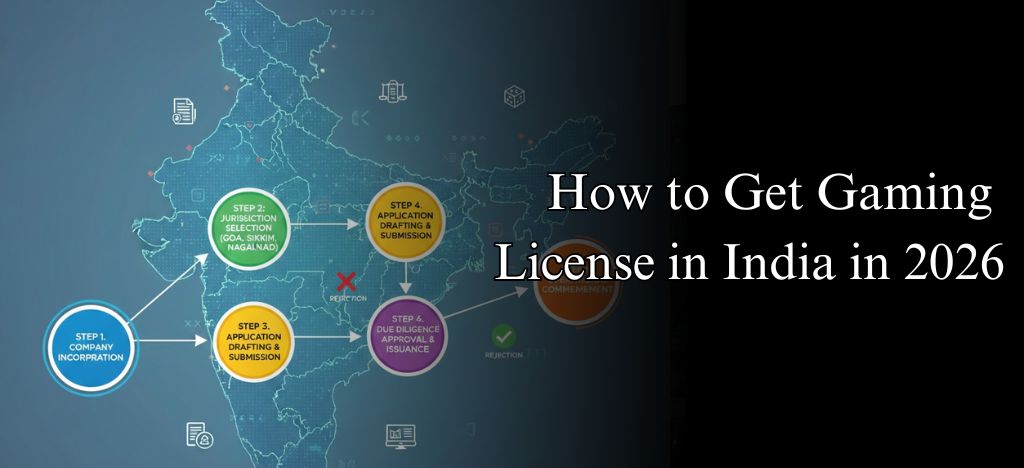
6. Step-by-Step Overview
The general process for legal procedures depends on the regulations established by each individual state. The process involves these steps which begin with:
- Determining legal classification of your game
- Consulting a legal expert specializing in gaming law
- Establishing your business entity through its legal formation
- Creating the necessary documents for compliance purposes
- Submitting your application to the appropriate state agency if your situation demands it
- Establishing protections for information technology systems and network security
- Your organization must complete regular reporting tasks while maintaining needed permits throughout the entire period of operation
Because regulations change, organizations require continuous legal oversight to maintain operations after they receive initial authorization.
7. Common Challenges in 2026
Entrepreneurs often face:
- Ambiguity in state-level interpretation
- Rapid regulatory updates
- Misclassification of game types
- Payment gateway restrictions
- Advertising compliance constraints
Understanding these challenges early helps reduce operational risks.
8. Why Regulatory Clarity Matters
The process of obtaining proper authorization and maintaining compliance helps businesses to:
- Builds investor confidence
- Enhances brand credibility
- Reduces risk of penalties
- Enables partnerships with payment providers
- Ensures long-term sustainability
In 2026, regulatory compliance is no longer optional—it is foundational to operating responsibly in India’s growing gaming market.
Final Thoughts
The process of How to Get Gaming License in India in 2026 requires people to study both state-specific regulations and central IT rules and the particular classification of their platforms.
All gaming businesses require their own unique licensing solution which means they must:
- Assess its operational model
- Evaluate legal requirements
- Consult qualified legal professionals
- Implement strong compliance systems
The future development of India’s gaming industry will depend on how licensing and regulatory rules become more transparent within its expanding gaming market.