Contact Us
How India’s Online Gaming Industry is Pivoting After the 2025 Ban

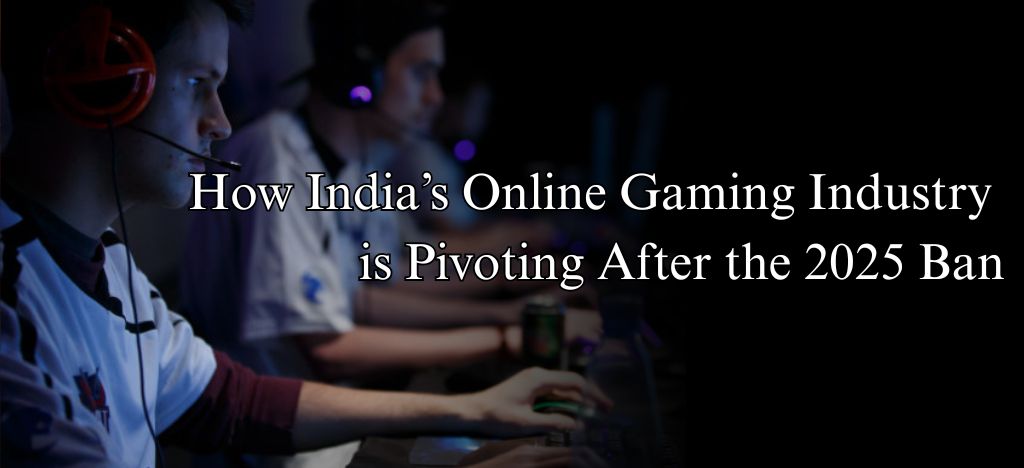
The Promotion and Regulation of Online Gaming Act was passed by Parliament in 2025, which essentially put real money online gaming out of existence across Canada, therefore creating a shockwave of disruption in the industry. Fantasy sports, online poker,-online rummy, and cash prize casual games were completely invalidated as business models, leading to all platforms having to scramble and find a way to pivot their businesses.
Key players such as Dream11, MPL, Zupee and PokerBaazi were forced to stop or cease operations with their real money contests, more than 1000 employees were laid off and investors immediately stopped allocating funds for the industry, leading many startups to re-evaluate their risk regarding regulation almost overnight.
However, the new law did not prohibit gaming as a whole, as gaming formats that do not involve real money, skill-based contests that involve no cash prizes and esports were included in the legal definition of gaming. This difference opened up the opportunity for the industry to create innovative strategies that will focus primarily on user engagement, community and content instead of cash pools as the driving force behind their business models.
1. Free To Play & Skill First Formats Will Become The Primary Business Model
Free to Play games, which previously were looked down upon due to their inability to provide cash payouts to their players, have now emerged as the primary business model in the industry. For example, Zupee maintained its casual gaming titles but shifted to free to play games, thus monetizing through advertising, brands, user retention and not through prize pools. Engagement metrics such as daily active users, length of session and repeat rate are now more of a focus for strategic decision making than gross gaming revenue.
2. Micro Dramas and Mobile Storytelling
The gaming industry has developed new creative methods which extend beyond its established gameplay boundaries. The studio developed vertical micro dramas which create short-form content between 1 and 3 minutes long that tells stories in four different genres. This format uses gaming knowledge to increase user time by creating brand partnerships which lead to subscription services that combine entertainment with gaming content.
3. Overseas Expansion and SaaS Offerings
WinZO and other companies use the regulatory delay in India to enter American and Latin American markets while exploring international business opportunities. The company generates revenue by selling its technical expertise through SaaS-based gaming infrastructure which it provides to worldwide gaming operators. The Indian gaming market enables domestic companies to stay competitive by providing them with "picks and shovels" which they can use to develop their business operations.
4. Sports Entertainment Reimagined
Dream Sports has shifted from cash contests to interactive sports experiences. Users join watch rooms which creators lead while they make predictions and watch matches in real time. The company generates revenue through advertising and brand partnerships and by offering exclusive fan features which transform audience interest into revenue while building a community around live sports events.
5. Esports and Competitive Gaming in Regulatory Sweet Spot
The 2025 law which excludes all non-monetary competitive gaming activities has resulted in esports tournaments and professional leagues gaining renewed interest from brands and creators. The sponsorship-supported competitions succeed because they utilize India's extensive mobile user market although the country has minimal console gaming industry access.
6. Regulatory and Tax Challenges Remain
Companies continue to shift their operations yet the market remains unpredictable. The GST dispute which involves tax claims on the full face value of bets instead of platform commissions continues to create uncertainty. Many companies are waiting for the Supreme Court to rule on both GST matters and skill-based contest legality because those decisions will shape their future business plans and impact investor trust.
7. Legal Pushback and Overseas Alternatives
The A23 platform along with other platforms opposes the ban by bringing their case to court because they believe it does not properly separate skill-based games from gambling activities. The real-money skill-based contests which face domestic restrictions still draw users and companies to international platforms.
Conclusion
The online gaming ban which India implemented in 2025 has now entered its sixth month yet the country maintains its operational gaming sector. The online gaming industry in India now relies on free-to-play games and esports and micro dramas and SaaS exports and interactive sports experiences as its fundamental elements. The future development of the industry depends on the GST verdict and final legal interpretations yet one principle establishes itself as the essential requirement for business success in India's online gaming market.
The law changed the business model, but the game, in one form or another, goes on.